



Bleeding gums after brushing can feel alarming, and most people immediately wonder how serious the problem actually is. Gingivitis and periodontitis are both forms of gum disease with overlapping early symptoms, but they differ in stage.
The two conditions differ in which tissues are damaged and how much of that damage persists. Gingivitis stays confined to the gum surface, while periodontitis reaches the bone and ligaments holding your teeth in place.
Only a dental examination confirms which one you are actually dealing with, so skip the guesswork and get it checked properly.
What is Gingivitis?
Gingivitis is the earliest stage of gum disease, developing when plaque buildup irritates the tissue surrounding your teeth. The inflammation shows up as redness, puffiness, and gums that bleed easily during brushing or flossing.
At this stage, the deeper structures anchoring your teeth remain untouched, which is genuinely encouraging news. Because the damage is limited to soft tissue, gingivitis usually resolves once plaque control improves and irritation subsides.
What is Periodontitis?
Periodontitis develops when untreated gingivitis advances and infection spreads beneath the gumline into deeper tissue. At that point, bacteria begin breaking down the ligaments and bone that hold each tooth firmly in its socket.
This process creates pockets between the tooth and gum where more bacteria can collect and multiply. Left unmanaged, periodontitis can eventually cause teeth to loosen, shift position, or fall out entirely.
Unlike gingivitis, periodontitis cannot fully reverse on its own, though professional care can control it and protect what remains.
Gingivitis vs. Periodontitis: Key Differences
Gingivitis involves inflammation only, without attachment loss or bone damage to the tooth’s supporting structures. Periodontitis actively destroys the tissue and bone that keep your teeth stable and properly positioned.
| Feature | Gingivitis | Periodontitis |
|---|---|---|
| Affected tissues | Gums only | Gums, ligament, and bones |
| Common signs | Redness, swelling, bleeding | Pockets, recession, loose teeth |
| Reversibility | Fully reversible | Manageable, not fully reversible |
| Typical care | Better hygiene, cleaning | Scaling, root planing, possible surgery |
Here’s a closer look at what each condition actually involves before you compare notes with your symptoms.
Gingivitis: Gum Inflammation
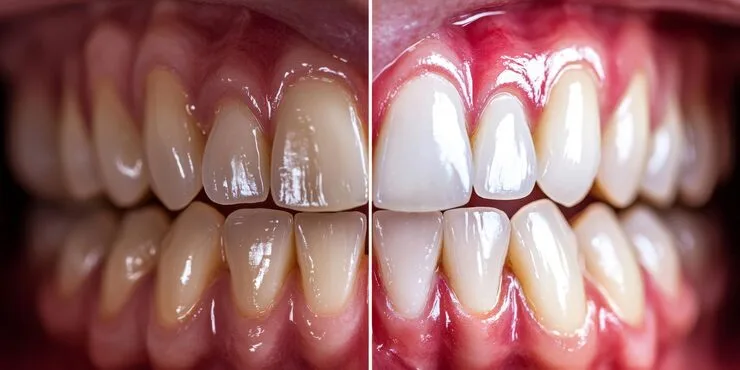
Redness, swelling, and tenderness along the gumline are the clearest signs that gingivitis has already set in. Bleeding during brushing or flossing often shows up before any pain does.
Persistent bad breath sometimes tags along, driven by the same bacterial buildup that causes the irritation. Even significant swelling doesn’t necessarily mean permanent damage has occurred underneath, since the supporting bone typically stays intact.
Periodontitis: Support Damage
Periodontal pockets form when inflammation pulls the gum away from the tooth, creating deeper spaces than a healthy mouth should have. According to the National Institute of Dental and Craniofacial Research, “the pockets around the teeth are usually between 1 and 3 millimeters” in a healthy mouth, and anything deeper can signal trouble.
As the disease advances, gum recession, tooth shifting, and looseness become more noticeable to both patients and dentists. Early periodontitis, though, can be far less obvious, sometimes producing only mild symptoms while damage quietly progresses beneath the surface.
How Does Gingivitis Progress to Periodontitis?
Gingivitis doesn’t turn into periodontitis on a fixed schedule, and plenty of people never progress past the gum-only stage at all. The shift usually happens when plaque and tartar sit undisturbed long enough for bacteria to work beneath the gumline.
Once bacteria reach that deeper zone, your immune system responds with more aggressive inflammation that ends up damaging the very structures it’s protecting. Genetics, immune response, and hygiene habits all influence how quickly, or whether, that progression occurs.
Risk Factors That Increase Gum Disease Severity
Several everyday habits and health conditions increase the likelihood that gum disease will start or progress aggressively. Nationally, nearly half of adults aged 30 and older already have periodontitis, according to the CDC, which shows just how common this progression really is.
- Smoking or tobacco use, which reduces blood flow and slows healing in gum tissue
- Poorly controlled diabetes, which makes infections harder for your body to fight off
- Hormonal shifts during pregnancy, puberty, or menopause that increase gum sensitivity
- Certain medications that reduce saliva flow and let plaque build up faster
- Genetics, since some people are simply more prone to gum inflammation than others
None of these factors guarantee that periodontitis will develop, but each one increases the risk enough to warrant closer attention.
How to Tell Gingivitis From Periodontitis
Bleeding and inflammation are present in both conditions, so symptoms alone can’t determine which stage you’re in. Persistent bleeding, gum recession, visible pus, bite changes, or loose teeth all deserve a professional evaluation rather than guesswork.
Here’s what separates the two conditions once you actually know what to look for.
Common Gingivitis Signs
Bleeding during brushing or flossing is the most recognizable early sign, especially when it happens consistently. Red or swollen gums, tenderness, and persistent bad breath often accompany that bleeding.
Healthy gums shouldn’t bleed during normal brushing or flossing. If bleeding continues after a week or two of improved hygiene, mention that pattern to your dentist.
Periodontitis Warning Signs
Receding gums, deeper pockets, and visible pus near the gumline point toward periodontitis rather than simple inflammation. Tooth sensitivity, noticeable bite changes, and teeth that feel loose are more advanced warning signs.
Dentists distinguish between the two conditions using periodontal measurements, clinical attachment findings, and dental X-rays rather than appearance alone. That’s also when a referral to periodontists in Las Vegas, NV, becomes part of the conversation, since specialists handle more advanced cases.
When Should You See a Dentist for Gum Problems?

Any bleeding that persists for more than a week or two after improving your routine deserves attention. The same goes for swelling, receding gums, loose teeth, or a lingering unpleasant taste that won’t go away.
Waiting rarely makes gum disease easier to treat, and early evaluation almost always means simpler care. A dentist in Las Vegas who is familiar with periodontal disease can quickly determine exactly which stage you’re in.
How Treatment and Prevention Differ
Gingivitis and periodontitis call for different treatment approaches, since one condition reverses and the other requires ongoing management. Neither has a single universal treatment plan, because severity and individual risk factors shape what a dentist recommends.
Here’s how care typically differs depending on the stage you’re in.
Gingivitis Care
Improved plaque removal at home is the foundation of treatment, starting with twice-daily brushing and daily interdental cleaning. A professional cleaning removes hardened tartar that brushing alone cannot remove.
Booking dental preventive care services on a regular schedule catches irritation early, often before symptoms appear. Therapeutic mouthwash can support your routine, but it was never meant to replace brushing, flossing, or dental visits.
Periodontitis Treatment
Scaling and root planing, a deeper cleaning beneath the gumline, is usually the first step once periodontitis is confirmed. Periodontal maintenance visits happen more frequently afterward, since the condition needs ongoing monitoring rather than a single fix.
More advanced cases sometimes need surgical or regenerative treatment to repair damaged bone and tissue. Exploring the full range of dental services in Las Vegas, NV, helps you understand all your options.
Your Smile Deserves a Clear Diagnosis, Not a Guess
Gingivitis and periodontitis share enough symptoms that guessing which one you have rarely ends well. A proper evaluation identifies your exact stage and matches you with treatment that actually fits your gums, not a generic plan.
Baldwin Distinctive Dentistry offers thorough periodontal exams, honest explanations, and treatment built around your specific situation. Whether your gums need better care or a deeper cleaning, our Las Vegas team is ready to help, so call or book online today.
Frequently Asked Questions
Can gingivitis heal on its own?
Gingivitis can improve with better home care alone, especially in mild cases caught early enough. Consistent brushing, daily flossing, and a professional cleaning usually resolve inflammation within a couple of weeks. Ignoring it, though, allows bacteria to keep working beneath the gumline over time.
How long does gingivitis take to become periodontitis?
There’s no fixed timeline, since progression depends on individual factors like genetics, hygiene habits, and overall health. For some people, gingivitis lingers for years without advancing, while for others, the shift happens faster. Regular dental visits help catch that transition before it goes very far.
Can periodontitis be reversed?
Periodontitis cannot fully reverse once bone and attachment loss have occurred around the affected teeth. Treatment, though, can stop the disease from progressing further and help preserve remaining teeth. Scaling, root planing, and maintenance visits typically form the foundation of that ongoing plan.
How does a dentist tell gingivitis from periodontitis?
Dentists rely on periodontal probing, clinical attachment measurements, and dental X-rays rather than visual appearance alone. Probing depth reveals how much attachment loss has occurred, information symptoms alone cannot reliably provide. That combination of findings determines your exact diagnosis and the subsequent treatment plan.
Contact Us for Healthier Gums and a Healthier Smile
Gum disease doesn’t always follow the same path, and untreated gingivitis doesn’t automatically turn into periodontitis for everyone. What it does is create ongoing risk, and that risk only increases the longer irritation goes unaddressed.
Baldwin Distinctive Dentistry offers thorough evaluations that pinpoint exactly where your gums stand right now, along with a treatment plan tailored to your specific needs. Contact us today and let our Las Vegas team help protect your smile before symptoms worsen.